,

How will theatres evolve in this brave new world?
The West End

The West End

Carousel at Regent’s Park Open Air Theatre? I had forgotten there was another revival, to be honest.

Selladoor Worldwide announcing it will suspend its 2020 touring productions – shifting the majority of shows to 2021. Couldn’t care less.

Edinburgh Fringe? Thrilled the city’s residents are getting a break from the annual invasion of tourists.

But a survey by U.K. Theatres estimated that almost three-quarters of theatres and producers say they face financial collapse without extra government assistance – with more than 1,000 theatres around the country face insolvency.

That one stopped me in my tracks with a “say it ain’t so?”

A significant number of the theatre world’s staff will be made redundant unless we receive additional financial support from the government.

Producer Sonia Friedman has described the sector as being “on the brink of total collapse” and “obliteration”. Several theatres have already folded, including Southampton’s Nuffield Theatre and Leicester Haymarket.

Culture Secretary Oliver Dowden said that he has spoken to Andrew Lloyd Webber about using the experiences from his South Korean production of Phantom of the Opera, which is currently playing to 1,600 people to restart the West End. Dowden also said that ‘drive in opera’ streaming shows to ‘outdoor spaces’ were also ideas that could be pursued.

Playwright James Graham recently appeared on BBC One’s Question Time, making the case for urgent Government support to ensure theatre and its workforce survive the months of closure ahead.

Graham eloquently said that a government support package should not be viewed as a bailout “because it really is an investment”, he went on to stress that theatre will be among the last to restart operations.

The Covid crisis has been a bigger shock to all businesses than the 9/11 terror attacks and the 2008 global financial crisis; what has taken place is a phenomenon known in the insurance industry as an act of God, a rare natural catastrophe that could have happened at any point.

The harsh reality is that public sector debt is on course to hit £2trillion by Christmas, the equivalent of an entire year of British economic output in normal times.

People will lose their jobs and some theatre buildings will close their doors for good.

Ministers have refused to extend bespoke support to the industry, although they are eligible for emergency loans, Arts Council England emergency support grants and the government furlough scheme

The sector faces an uncertain future. But it is waiting for the green light to reopen when restrictions are lifted; social distancing means theatres are no longer viable businesses.

‪According to figures from the Office For National Statistics, the arts and entertainment sector contributes £2.8bn a year to the Treasury whilst providing 363,700 jobs.

These statistics are overused and out of date, though. We need a new approach.
One Man, Two Guvnors has been streamed 2 million times as part of National Theatre at Home

One Man, Two Guvnors has been streamed 2 million times as part of National Theatre at Home

Reopening theatres is not just an economic necessity. Financially, the costs should and could logically be met over the very long-term, contained in a unique account and financed by bonds with a 40-60 year maturity that spread the load sufficiently to allow the theatre world to survive and thrive.

‪But what will the future look like and how will theatre itself survive and adapt ahead of the looming recession?

The cultural sector is more badly positioned than any other in terms of cash in hand. It is also less likely to make a quick recovery. Arts and cultural organisations have lost up to 95 percent of their income that is largely reliant on ticket and bar sales.

We must hope that we cherish anew how essential live theatre and participation is, with all the emotions, wellbeing, and interactions that it cultivates.

Theatre is now available to anyone who wants it – pretty much. If you have an internet connection you can currently see the best of British theatre in comfort with a drink your hand, thanks to the National Theatre at Home streaming service. Nearly 20% of adults are now watching theatre, dance or music during lockdown.
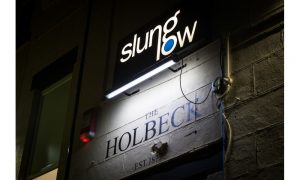
Perhaps the British theatre world will become more open spaces. Fun Palaces, an idea originally put forward by Joan Littlewood supports and promotes the creativity of everyone, not just artists.
Slung Low HQ - the U.Ks oldest working men’s club

Slung Low HQ – the U.Ks oldest working men’s club

Smartest and most interesting of the lot, however, is Slung Low have been operating out of a Working Men’s Club in a deprived area of Leeds. They have been co-ordinating emergency food parcel deliveries to vulnerable people in their community during the pandemic.

In a fascinating blog Slung Low’s artistic director Alan Lane advocates for a fairer system and exposes the insurmountable reality of co-ordinating the community response for Leeds City Council. The reasons the company deserves to be put on a pedestal are the extraordinary efforts and the fact they have, completely to my satisfaction, risen to the occasion.

Progress, people.
As well as that, Slung Low launched an open-air art gallery, continue to stream community classes, hosted a crisis game show weekly and collected people’s prescriptions. Lane and his team of 90 volunteers’ dedication to the local people of Holbeck, as well as their breath-taking solutions to challenges make them one of the great cultural organisations of the modern era.

They should be the blueprint that every publicly funded theatre aims to emulate.

We need to embrace the possibilities that change brings, not hope that the theatre world will get back to normal.

Perhaps with the new, collective knowledge, gained from weeks of isolation, our theatres and arts centres will be truly valued, trusted and, crucially, understood, even more by the communities that they sit in.

This once in a lifetime event gives us a once in a lifetime chance – the question is will we take the chance and seize the opportunities that they bring?


Bristol’s cultural organisations team up to launch city-wide Arts Channel, presenting content “Together Online”

Bristol Arts Channel

Bristol’s cultural organisations today announced that they will be coming together to present a programme of online arts experiences for audiences missing the buzz and community of Bristol’s vibrant arts scene. Bristol Arts Channel will launch for a pilot season from 29 May until 30 June, in collaboration with The Space and Bristol & Bath Creative R&D.

Created with founding partners Bristol Old Vic, Watershed, Colston Hall, St Pauls Carnival, Trinity, Spike Island, St George’s Bristol, MAYK, Arnolfini, Paraorchestra and Bristol Museums, the pilot programme of work will feature streamed performances, live and on demand, interactive events, carnivalesque experiments, virtual tours, playful Zoom experiences, lockdown lullabies, online exhibitions and mini-festivals, all curated by Bristol’s cultural organisations to give audiences moments of togetherness from the comfort of their own homes.

Support from Bristol & Bath Creative R&D and digital commissioning and development agency The Space will enable participants to make their selected content online as accessible as possible, through captioning and interpretation.

Upcoming highlights include:

  • Bristol Old Vic’s streamed season of plays, including Messiah (Fri 29 May), A Monster Calls (Fri 5 Jun) and The Grinning Man (Fri 26 Jun), with two more titles announced shortly.
  • Come the Revolution Watch Party with Watershed – Come the Revolution are hosting Sunday evening watching parties featuring some of the best Black Film & TV Netflix has to offer.
  • Colston Hall and Simple Things Festival will be broadcasting archive recordings of some of their most memorable gigs including Omar Souleyman from 2017 plus more to be announced.
  • Trinity Centre will be working with their Associate Artist Roxana Vilk to collect Lullabies from across Bristol in this time of quarantine for a digital exhibition later in the year.
  • Paraorchestra will be hosting their first Zoom performance, Paraorchestra Presents; an intimate live gig featuring solo performances from some of their talented musicians & collaborators.
  • St George’s Bristol will be presenting a new twist on its popular Thursday Lunchtime Concert Series and weaving a path through all sorts of sonic possibilities in its Wednesday evening Listening Room. There’ll be an invitation too to join Julian Baggini, Philosopher in Residence, as he flicks through the weekend papers and unpacks the philosophy behind the headlines.
  • Watershed will be hosting Nacho Problem: Cocktails and canapés at home – join Watershed Head Chef Chris Warren for a cook in of Watershed’s famous Nachos – with details of how to recreate them in the comfort of your own home. Plus a cooking Q&A and some idea for some film-themed cocktails.
  • Colston Hall will present a broadcast of previously unreleased concert footage of John Grant performing with the Royal Northern Sinfonia, filmed in 2014.
  • Deaf Conversations about Cinema will move online – Watershed’s monthly film discussion event for Deaf and hearing audience members moves online for the first time. Join an online watching party of a specially selected film, and then come together to share your thoughts and questions. Hosted by David Ellington.
  • Bristol Museums will present The World in Bristol, a festival of online activities celebrating Bristol as a global city. It will explore the diverse cultures that enrich and shape the city, as well as highlighting museum collections in new ways through presentations of artists’ work and online exhibitions.
  • Colston Hall will present Bristol Takeover Online Part 2. Following on from Colston Hall’s hugely successful Bristol Takeover event on 23 May, which was watched by over 8,000 people and raised over £10,000 to support participating artists and venues, the team will be presenting Part 2 on Sat 20 Jun. Live streaming a line-up of fresh new talent alongside established names, from their homes to yours, in partnership with Bristol venues including The Louisiana, Thekla, The Fleece, Exchange, St George’s Bristol, Trinity and more.
  • Plus so much more…

The Jamie Lloyd Company announces the postponement of The Seagull and A Doll’s House

The Jamie Lloyd Company, the partnership between Ambassador Theatre Group (ATG) and Artistic Director Jamie Lloyd today announce, due to the ongoing impact of the Coronavirus pandemic, Anya Reiss’ adaptation of Anton Chekhov’s The Seagull and Henrik Ibsen’s A Doll’s House, in a version by Frank McGuinness are both now postponed. When the season reopens Emilia Clarke will reprise her role as Nina in The Seagull and Jessica Chastain will lead the company of A Doll’s House, with full casts and dates to be announced.

Jamie Lloyd said today, “This is, of course, an incredibly challenging time for everyone, but we are looking forward to presenting our season to audiences in the future. I’m thrilled that Emilia Clarke and Jessica Chastain will lead The Seagull and A Doll’s House as soon as we can get back into the theatre. We also remain committed to offering thousands of £15 and free tickets, together with our unique education work and our exciting new Emerge scheme, as soon as the season reopens.”

In addition, it is announced that Jamie Lloyd Company: Emerge, a talent development programme offering a first step into the industry through paid mentorship will continue. The schemes inaugural participants, Rona Berisha Castroiti (Sound Design), Alessandra Davison (Director), Rida Hamidou (Writer), Maeve Roscoe (Writer) and Spiky Saul (Director), will return under the mentorship of Jamie Lloyd, Anya Reiss and George Dennis when the season recommences. The company also remain commited to offering 15,000 free tickets for those with limited access to the arts, and 15,000 £15 tickets for under 30s, key workers and those receiving job seeker’s allowance and other government benefits across the Playhouse season and will continue to offer workshops, Q&As, uncovered learning days, teacher resources and bespoke engagement opportunities in relation to each production.

 The Seagull and A Doll’s House formed part of company’s Playhouse season, supported by British Airways, which opened with the critically acclaimed production of Edmond Rostand’s Cyrano de Bergerac, freely adapted by Martin Crimp and starring James McAvoy.

The Seagull features design by Soutra Gilmour, lighting design by Jackie Shemesh, composition & sound design by George Dennis, costume supervision by Anna Josephs, props supervision by Fahmida Bakht, associate Direction by Jonathan Glew, associate design by Rachel Wingate, and Stuart Burt CDG as casting director.

A Doll’s House features design by Soutra Gilmour, lighting design by Jon Clark, and composition & sound design by Ben and Max Ringham.

http://thejamielloydcompany.com

Twitter: @JamieLloydCo

Instagram: @jamielloydco

Coriolanus streamed on Youtube as part of National Theatre at Home From Thursday 4 June

National Theatre
  • Tom Hiddleston plays the title role in Shakespeare’s searing tragedy of political manipulation and revenge staged at Donmar Warehouse by former Artistic Director, Josie Rourke.
  • Cast also includes Alfred Enoch, Deborah Findlay and Mark Gatiss. 
  • Audio-Described performance of Coriolanus available via YouTube
  • Broadcast as part of NATIONAL THEATRE AT HOME – the National’s new initiative to screen a selection of much-loved National Theatre Live productions on YouTube for free over the next two months.
  • NT Live has been broadcasting for ten years and screens to over 2,500 cinemas in 60 countries.

Coriolanus will be shown on the National Theatre’s YouTube channel on Thursday 4 June, 7pm BST as part of NATIONAL THEATRE AT HOME
When an old adversary threatens Rome, the city calls once more on her hero and defender: Coriolanus (Tom Hiddleston). But he has enemies at home too.

During this unprecedented time which has seen the closure of theatres, cinemas and schools, NATIONAL THEATRE AT HOME is providing access to content online for audiences to watch from their homes.Audiences around the world can stream NT Live productions for free via YouTube every Thursday at 7.00pm BST and they will then be available on demand for seven days.

An audio-described broadcast of Coriolanus will also be available for free via YouTube from Thursday 4 June and on demand for a further seven days. This stream can be found via a link in the ‘More’ section of the original premiere YouTube page.

Alongside the streamed productions, NATIONAL THEATRE AT HOME will also feature the National Theatre at Home Quiz, to be played from home featuring familiar faces from the world of stage and screen as the quizmasters. On the final Monday of each month people will be able join the virtual quiz directly from their homes via the NT’s YouTube channel and Facebook page live at 7pm. 

 National Theatre Live turned ten on 25th June last year – the date of the first ever NT Live broadcast which was Phédre starring Academy Award® winner Helen Mirren. Over ten years over 80 theatre productionshave been shown in 3500 venues worldwide, reaching an overall audience of more than 10 million people. NT Live currently screens in 2500 venues across 65 countries. Recent broadcasts include Cyrano de Bergerac with James McAvoy, Present Laughter with Andrew Scott, Fleabag with Phoebe Waller-Bridge, All My Sons with Sally Field and Bill Pullman, All About Eve with Gillian Anderson and Lily James, Antony and Cleopatra with Ralph Fiennes and Sophie Okonedo, Julius Caesar with David Morrissey and Ben Whishaw, Cat on a Hot Tin Roof with Sienna Miller.

,

PFT’s Elizabeth Newman: ‘Theatre has gone to sleep – so that we can carry on dreaming.’

Elizabeth Newman has been artistic director at Pitlochry Festival Theatre in the Highlands since 2018 after eight years at Bolton’s Octagon, five as associate director and three as artistic director.

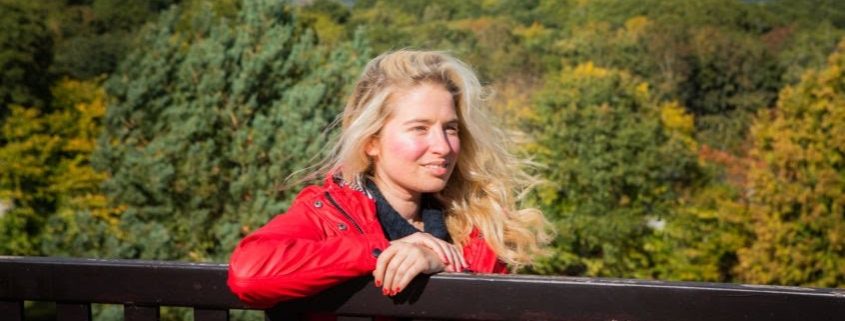
Scotland is the last of the four parts of the UK to publish specific plans on easing the lockdown. So, as she pops up on FaceTime, I ask her how she is coping. “I’m coping OK – like most people, there are only so many times I can sort out my sock drawer,” she begins, once in focus, with her long blonde hair and big warm smile.

“But I miss being with colleagues that I make work with enormously– I have days where I am sad, but most of my time is spent running the theatre remotely, liaising with the board. Kris [Bryce], the executive and I are doing everything we can to ensure that we have a future as an organisation.”

Like every other UK theatre, Pitlochry was forced to postpone its summer season and close the doors. Now, though, one of the planned shows, David Greig’s play Adventures with the Painted People, is being made for Radio 3 as part of the BBC’s Culture in Quarantine season. It is Greig’s first original play in 7 years.

How is she finding Zoom rehearsals? “I’m not a fan of it,” she replies.

“You know, I don’t think that I’m ever going to get used to it – nothing can replace being in a rehearsal room with people. I do think it is really hard for the actors too. We are making the best of it; it is only temporary.”

“What’s been brilliant about developing a play for radio is maintaining the essence – its been very enjoyable – oddly it is the most visual art form, because you have to conjure the picture in the audiences imagination without using eyes – how do we create a flash on stage and make it as instantaneous and joyful, for example. It has been absolutely wonderful to collaborate with independent audio producers, Naked Productions and the BBC.”

Adventures with Painted People

Adventures with Painted People

We talk about her working relationship with Scotland’s leading playwright and artistic director of Edinburgh’s Royal Lyceum Theatre. “David is incredibly collaborative,” she says, beaming.

“We worked together last year on a project inspired by Charlotte Higgins’ book Under Another Sky as part of the International Edinburgh Book Festival. He is full of passion and excitement for the plays that he makes and is a joy to be around and he makes me laugh a lot – great to work with – and we continued to develop the play; throughout drafting, editing and rehearsals.”

Recently, the Lyceum theatre announced it was postponing all remaining 2020 performances and warned of imminent redundancies due to the impact of Covid-19, which has cost the venue more £700,000 in lost income. How is she preparing to safeguard her theatres future?

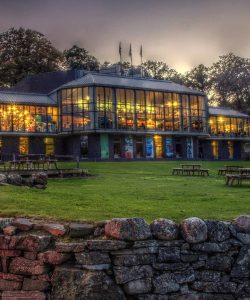
Pitlochry Festival Theatre

Pitlochry Festival Theatre

“Everyone across the UK is making great effort to develop a strategy for our cultural sectors’ survival and ensure that there are organisations for many years to come,” she says.

“That will involve shrinking so that we are able to grow again. The way I’ve put it is that the theatre has gone to sleep so that we can carry on dreaming; dreams until we can come back together in physical form to realise them.”

Newman says that the play which imagines a meeting between a Roman officer and a Pictish leader is, by and large, “a love story” and that success will look like two things, “that it connects with and inspires people to want to come and see the full-length play in the flesh at PFT in 2021” and “that it encourage thousands of people to listen to more radio plays.”

“Success would be that people’s interest in a part of time that myself and David are obsessed – Roman history – is shared and that other people become obsessed by it. We have had the best time – it was about exploring a space in history that is so relevant to today and what It means to be part of a multi-cultural and contemporary society, despite our differences,” Newman says.

I ask if, theatres sharing archive productions online and streaming – usually for free- is a good thing. There is the briefest of pauses. “I think it is important to know that it is not a substitute for live theatre,” she says.

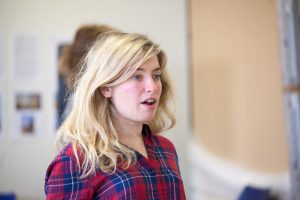
Elizabeth Newman in real-life rehearsals

Elizabeth Newman in real-life rehearsals

“I love NT Live, don’t get me wrong. However, when I watch a play that has been filmed it was usually because it was the closest thing I could get to being there sometimes. It certainly has its place, though, it is just that  it is a totally different form; it is theatre on screen – not theatre.”

“It is important that we continue make generous offers to our audiences and not abandon them during the pandemic at a time when they need us the most,” Newman says.

Despite the ongoing uncertainty, Pitlochry Festival Theatre has been organising activities, like a phone service for actors to have conversations with lonely locals; three digital daily rays of “Light Hope Joy”; and 50 works of art dedicated to the River Tay, poetry readings and more.

Newman is optimistic yet realistic about utilising the 11 acres of garden of PFT’s setting. “We do have a massive car park… But ‘Drive-in theatre’ isn’t financially viable for us.”

“Everybody is playing wait and see. For us, that does not mean that we are not exploring work outdoors, different kinds of pop-up events, unique experiences that could safely occur. But they will have to adhere to government guidance. We want to ensure that our audiences remain safe.”

Newman and I have been talking for nearly an hour and I would be happy to talk for 10 more.

“We need people to keep supporting us really – in whatever way that they are able to. We need people to come through the dark bits to get to the light – we need people to stay safe and well. I cannot bear the idea that people are lonely at home – I hope that people do continue use our telephone club.”

Adventures with the Painted People will be broadcast on Sunday 7 June at 7.30pm on BBC Radio 3 and is presented by BBC ARTS – Culture in Quarantine, BBC Radio 3, Naked Productions and Pitlochry Festival Theatre in association with Royal Lyceum Theatre, Edinburgh.

BC/EFA to Stream “Chita: A Legendary Celebration” on Friday, May 29

Chita: A Legendary Celebration , Broadway Cares/Equity Fights AIDS’ one-night-only evening of song and dance celebrating the legendary Chita Rivera , returns this Friday, May 29, 2020, in an exclusive stream benefiting Broadway Cares and its COVID-19 emergency efforts.

The free stream is set for 8 pm Eastern and can be watched at broadwaycares.org/chita and on Broadway Cares’ social media channels.

Interspersed among remarkable performances will be new interviews with Rivera from her home conducted remotely by veteran Broadway journalist Richard Ridge , host of “Backstage with Richard Ridge” on BroadwayWorld.com

Chita: A Legendary Celebration , which originally took place at the August Wilson Theatre, features performances from Rivera, Tommy Tune and Ben Vereen , as well as a video tribute from legendary composer John Kander .

“My history with Broadway Cares/Equity Fights AIDS goes back to the beginning,” Rivera said. “I’m overjoyed that this magical evening is being shared with even more people now, and feel so fortunate that this performance will yet again help people in need, especially during this most challenging moment in history.”

Tom Viola , executive director of Broadway Cares, said: “Since our earliest days, Chita has been one of Broadway Cares’ biggest champions, a true and loyal friend. She has appeared in nearly all of our annual events, signed thousands of posters and Playbills, made audience appeals, worn Easter Bonnets, been immortalized as a holiday ornament, greeted fans at the Broadway Flea Market & Grand Auction, and, through it all, encouraged us because she cares for those who need help most. And that continues today, as she shares her heart and talent virtually with this special stream.”

While the concert stream is free to all, innovative VIP and sponsorship opportunities also are available that provide private pre-show experiences and recognition. Information is available at broadwaycares.org/chita .

Every dollar donated from the evening will help provide healthy meals, lifesaving medication, emergency financial assistance, housing, counseling and more to people across the country, as well as those within the entertainment industry, whose needs are heightened by the COVID-19 crisis.

Thus far in response to the pandemic, Broadway Cares has given $5 million to The Actors Fund, ensuring thousands who work in theater and the performing arts receive basic living expenses including essential medications, housing, food and utilities. The organization awarded another $2 million to vital organizations across the country whose needs are heightened by the COVID-19 crisis through its Emergency Grants for Pandemic Relief.

Chita: A Legendary Celebration was originally presented October 7, 2013. It was directed by Graciela Daniele and written by Terrence McNally with music direction by Michael Croiter . Sound design was by Andrew Keister and lighting design by Jeff Croiter . Richard Hester served as production supervisor and Arturo E. Porazzi was production stage manager.

Broadway Cares/Equity Fights AIDS is one of the nation’s leading industry-based, nonprofit AIDS fundraising and grant-making organizations. By drawing upon the talents, resources, and generosity of the American theater community, since 1988 Broadway Cares/Equity Fights AIDS has raised more than $300 million for essential services for people with AIDS and other critical illnesses across the United States.

Broadway Cares/Equity Fights AIDS is the major supporter of the social service programs at The Actors Fund, including the HIV/AIDS Initiative, the Phyllis Newman Women’s Health Initiative and the Samuel J. Friedman Health Center for the Performing Arts. Broadway Cares also awards annual grants to more than 450 AIDS and family service organizations in all 50 states, providing lifesaving medication, healthy meals, counseling and emergency assistance.

For more information, please visit Broadway Cares online at broadwaycares.org , at facebook.com/BCEFA , at instagram.com/BCEFA , at twitter.com/BCEFA and at youtube.com/BCEFA .

Theatre Quiz: Friday 29 May @ 8.30pm

Theatre Quiz with Carl Woodward

Theatre Quiz with Carl Woodward

Last week featured Broadway dolls, plenty of lols & more.

This week we are joined by a very special mystery special guest.

So, if you would like to join then email me everything that you think I need to know about yourself, as well as telling me what you most miss about live theatre.

E: MRCARLWOODWARD@GMAIL.COM

Application deadline is Thursday 28 May at 6.00pm and spaces are limited. If you’re selected to be play i’ll be in touch. Spaces are limited.

NOTES:

— There is a prize

– You need to be over 18, or literally 18.

– Please do not bring any animals unless this has been explicitly requested.

– Due to the likelihood of contestant duties inducing strong feelings of euphoria I do not recommend participating on an empty stomach.

Cheers!


Southbank Centre details ‘closure risk’ until at least April 2021 and calls on the government for further urgent support

Southbank
  • The Southbank Centre today announces it is at risk of closure until at least April 2021, detailing crippling financial pressure as its reserves run dry as a result of the economic impact of COVID-19.

  • The venue today calls on the Government to support the cultural sector through a number of key recommendations.

  • The announcement comes with initial findings of a new report into the arts charity’s social and economic impact.

  • Since announcing its closure on 17 March, the organisation has furloughed the majority of its staff but is nevertheless facing a £5.1 million deficit in FY20/21.

The Southbank Centre today announces it is at risk of closure until at least April 2021, as a result of the economic impact of COVID-19, disclosing details of crippling financial pressure as its reserves run dry. 

The charity states that it is forecasting a best case scenario of a £5m loss at the end of 2020/21 financial year. However, in arriving at this position, the organisation will have used up all its reserves and be in deficit, will have needed £4m support from the Government furlough scheme and will have used the remainder of its annual grant from Arts Council England to effectively mothball the buildings. There will be a need to make some staff redundant and the organisation will cease to be a going concern before the end of the year if further urgent support is not secured.

Despite being the UK’s largest arts and cultural organisation, the Southbank Centre confirms that there will be hardly any artistic activity throughout 2020/21 as to present anything like a normal range of events would have seen the losses rise to around £11m (after furlough support and ACE grant), given the restrictions that social distancing impose on the ability to realise workable ticket revenue.

Today’s announcement comes as the Southbank Centre releases the initial findings of a new report by Hatch Regeneris, a leading, independent economics consultancy which illustrates the cultural and economic value of the Southbank Centre to the cultural sector.

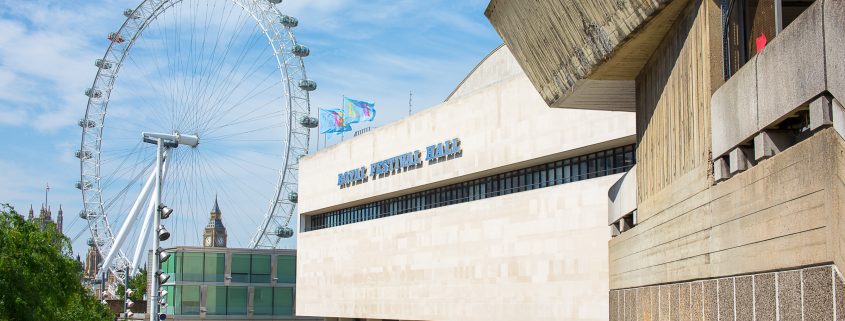
The Southbank Centre presents over 3,500 events a year – of which over 40% are free – and welcomes enough visitors to fill Wembley Stadium 50 times over.  At its heart is the Royal Festival Hall – the iconic and only remaining building from the 1951 Festival of Britain, a Festival designed to be “a tonic for the nation” following the country’s endurance of the second world war. 

As a key arts hub, the Centre works with international artists, gives a home to eight orchestras and supports grassroots cultural activity. An extensive creative learning programme reaches young people and families, the socially isolated, and those affected by homelessness, dementia and addiction. All of this work is now under significant threat. 

The Southbank Centre’s annual Arts Council England grant represents just 37% of its income. While the arts charity has been extremely successful at replacing its declining public funding with earned income from ticket sales, bars, restaurants and other commercial activity that takes place across its site, this success now makes the Southbank Centre highly vulnerable. The mandatory closure of the venues, bars and restaurants has led to the immediate and catastrophic loss of 60% of its income. With the likelihood of social-distancing measures remaining in place for many months to come, the venues are unlikely to be able to re-open until April 2021, as to do so on restricted capacities (30%) means the organisation would lose more money by opening than it would generate. 

 The Southbank Centre now calls on the Government to:

  • Extend the furlough scheme beyond October for the cultural sector;

  • Develop a large scale intervention to support the arts sector as it navigates this crisis and which helps it survive and plan for the future;

  • Support those self-employed artists and musicians who do not qualify under the current financial support schemes.

 Alongside supporting over 7,000 FTE jobs in London’s cultural visitor economy, the Southbank Centre is an important cultural tourism asset. Around 1 in 10 of all London’s international visitors went to the Southbank Centre, along with 1 in 3 cultural tourists. The report notes that four out of five tourists to London cite “culture” as the major reason for their visit, and these visits support 80,000 jobs and £3.2 billion in Gross Value Added in the capital. This is supported by the Association of Leading Visitor Attractions (ALVA) who note that the Centre is the UK’s fifth most visited attraction. 

 In addition, there is a growing body of evidence on wellbeing effects from engaging with the arts: the report estimates that given its local reach, the Southbank Centre supports in excess of £150 million in wellbeing value per annum for the UK.

 Today’s announcement comes as the Southbank Centre makes preparations to cancel events from September – November 2020. The organisation is also considering the option of broadcasting concerts from behind closed-doors through Autumn 2020 and Spring 2021.

 Elaine Bedell, Chief Executive, Southbank Centre, says:

“It is with an incredibly heavy heart that we today share further details about the future of the Southbank Centre. We know we are not alone in this and stand with our friends, partners, and colleagues – both here in the UK and abroad – during this time of unprecedented challenge.

 With eight orchestras, the National Poetry Library, and Arts Council Collection all calling us home, and playing host to over 4.45 million visitors each year, we’re doing all we can to safeguard the Southbank Centre we currently know and love for the years ahead. However, this crisis has hit hard, and we join a number of other organisations and venues in sounding the alarm about the long-term health of UK arts and culture.

 The Southbank Centre’s own history is traced directly to the 1951 Festival of Britain. Here, the post-war government recognised how vital arts and culture were to the health and well-being of a traumatised nation. Just as the South Bank was a focal point of social and economic recovery then, we hope that we’ll emerge from this crisis to an even brighter future, throwing our doors wide open once more.”


SMASH, A New Musical, Is Heading To Broadway

SMASH, A New Musical, is setting its sights on Broadway with a creative dream team, it was announced today by Steven Spielberg, Robert Greenblatt and Neil Meron who will serve as lead producers. They are developing a live stage adaptation inspired by the groundbreaking NBC series of the same name on which they all worked together.

The Tony and Grammy-winning duo of Marc Shaiman and Scott Wittman, who wrote over two dozen songs for the television show will provide the score. The musical’s book will be co-written by two of Broadway’s most seasoned craftsmen, Tony winner Bob Martin (The Prom, The Drowsy Chaperone) and Tony-nominated Rick Elice (Jersey Boys, Peter and the Starcatcher). “Smash’s” Emmy-winning choreographer Joshua Bergasse will reprise his role for the stage musical.

“I am personally thrilled to be a part of this musical and its road to Broadway,” said Steven Spielberg whose original idea led to the NBC series. “’Smash’ is near and dear to my heart, and it seems fitting that a new musical inspired by what we did on the show would eventually come to the stage. I’m beyond thrilled to be working with this incredible creative team and my producing partners, who began the ‘Smash’ journey with me over ten years ago.”

Neil Meron added, “Speaking for myself and Bob Greenblatt, our partner when he was running NBC, we’re thrilled Steven wanted to embark on this musical with us. We’ve all felt that Shaiman and Wittman’s incredible score for ‘Smash’ belonged on Broadway. Collaborating with first-class bookwriters Rick Elice and Bob Martin, and the world’s best choreographer Josh Bergasse, will be the icing on the cake.”

Many of the songs that Shaiman and Wittman wrote for “Smash,” including the Emmy- nominated “Let Me Be Your Star” will be used in the stage musical. While the story will generally follow the rollercoaster ride of mounting Bombshell (the Broadway musical-within- the-musical about the life of Marilyn Monroe), the stage musical will depart liberally from the series. The characters Julia and Tom (the writers), as well as Ivy and Karen (the stars) will still be central to the storyline, but all other details are being kept under wraps.

“Smash” was groundbreaking in its ambitiousness and developed a rabid following, but its popularity has only grown in the following years. The cast performed an elaborate benefit concert of the songs from Bombshell at the Minskoff Theatre in June of 2015 which sold out in fifteen minutes. It was filmed but never shown until this week, when it was streamed in its entirety on People.com as a corona virus benefit for The Actors Fund.

The critically-acclaimed show debuted in 2012 to raves from The Los Angeles Time (“A triumph”), The San Francisco Chronicle (“It’s so good you can’t help wondering why no one thought of it before”), The Hollywood Reporter (“Excellent, a bar-raiser for broadcast networks and superior to ‘Glee’”), and The Huffington Post (“One of the strongest new shows of the season”) among many others.

Meron has collaborated previously with Shaiman and Wittman, first on the motion picture of their musical Hairspray starring John Travolta, as well as on the NBC live adaptation starring Harvey Fierstein. Meron and Greenblatt are also currently working with them on the upcoming musical adaptation of Some Like It Hot which is scheduled to open on Broadway in the fall of 2021.

And the songwriters previously adapted another Steven Spielberg property for Broadway, the musical Catch Me If You Can, which was based on his 2002 hit film starring Leonardo DiCaprio and Tom Hanks. Their other musicals include Mary Poppins Returns (Oscar-nominated), Charlie and the Chocolate Factory, and Martin Short: Fame Becomes Me. Shaiman is also an Emmy winner and seven-time Oscar nominee and Mr. Wittman is also an Oscar nominee.

Rick Elice is co-writer of the mega-hit Jersey Boys, as well as The Addams Family, The Cher Show, and Peter and the Starcatcher. Bob Martin began his Broadway career both starring in and writing the book (Tony Award) for The Drowsy Chaperone. He co-wrote the book to the musical The Prom and co-created the television series “Slings and Arrows.” Martin and Elice are currently adapting The Princess Bride as a musical for Broadway.

 Since “Smash,” Joshua Bergasse has become a frequent choreographer on Broadway where he was nominated for the Tony Award for his elaborate ballets in the recent revival of On The Town. He collaborated with Shaiman and Wittman as choreographer for their musical adaptation of Charlie and the Chocolate Factory and also did the revival of Lerner & Lowe’s Gigi starring Vanessa Hudgins.

Theresa Rebeck was the creator and Executive Producer of “Smash.” Executive producers also included Steven Spielberg, Neil Meron and the late Craig Zadan, Shaiman and Wittman, Darryl Frank and Justin Falvey, and Joshua Safran. It was produced by Universal Television in association with Dreamworks Television and Storyline Productions.

Development of SMASH, A New Musical is underway; no production dates are being announced at this time.

An open letter to theatre and performance makers

This is a letter to self-employed and freelance theatre and performance makers in the UK. To the actors, playwrights, directors, choreographers, stage managers, designers, stage crews and set-builders to name just a few.

We really miss being with you during this period of lockdown. Making theatre and performance is a collaborative endeavour, so we are particularly affected by having to be apart from one another right now. We’re not able to come together, in the same space, to share the experience of a live performance. We’re not able to practise and enjoy our artform in its most basic form.

It’s now looking increasingly likely that won’t be possible for months to come, and we recognise that many freelancers face real uncertainty about if and how they will be able to continue to work in theatre. 70% of people who work in theatre and performance in the UK are freelance or self-employed, and it’s for this workforce, in all its diversity and complexity, that the impact of the current situation is most acute.

During these past weeks we have had conversations with many of you to understand your needs and the ways you have been affected. We are writing to express our support for you, and to lay out some practical steps we are taking to improve the situation based on these conversations.

As well as exploring ways of producing work with freelancers during lockdown, and using this time to develop new projects with freelancers for the future, we are also are working together to coordinate our response to the government, to articulate clearly what we can offer and what we need.

Most urgently, we are calling for the Self-Employment Income Support Scheme to be extended in line with furloughing, for all self-employed workers, and in the specific case of theatre and performance workers, until theatres are able to safely reopen. We also want to see criteria removed from the scheme which are stopping legitimate and much-needed claims.

Some of you are already involved in these conversations. We welcome your voices and need to hear from more of you in the conversations to come. Your unique networks, skillsets, perspectives, and ideas are vital to the entire sector, and we need to work with you in our response to this crisis.

Each of the organisations who’ve signed this letter are committed to reaching out to their family of self-employed and freelance theatre makers; listening to how this is affecting your work and lives, and to your needs and ideas for the future.

More than that, we want to facilitate the establishment of a national task force of self-employed theatre and performance makers. The purpose of the task force is to strengthen the influence of the self-employed theatre and performance community. It would create ongoing points of connection between freelancers and organisations, and amplify the voice of the self-employed in the conversations to come. To help establish the task force, each of the organisations signing this letter will support a freelancer to join the group, ensuring they are paid for their time.

We want to offer a message of hope and solidarity. Our well-practised ability to work together, to form connections, and build relationships will help us through this. One day, hopefully soon, we will all be able to meet together, as people have done for centuries, in a shared space, for a shared experience. In the meantime, we remain committed to working for you and with you towards a sustainable future for theatre and performance.

Signed,

Access All Areas

Action for Children’s Arts

The Almeida Theatre

ArtsAdmin

The Actors Touring Company

Battersea Arts Centre

Birmingham Repertory Theatre

Boundless Theatre

Brighton Festival

Bristol Old Vic

Brixton House

The Bush Theatre

Chichester Festival Theatre

China Plate

Contact

Dance Umbrella

Derby Theatre

Eden Court Highlands

English Touring Theatre

Fio

Fuel

Gate Theatre

Graeae

HOME

Improbable

Kiln Theatre

Leeds Playhouse

Leicester Curve

The National Theatre

National Theatre of Scotland

National Theatre Wales

National Youth Theatre of Great Britain

The New Wolsey Theatre

Northern Stage

Nottingham Playhouse

One Dance UK

Paines Plough

Rose Theatre Kingston

Royal & Derngate

The Royal Court Theatre

The Royal Shakespeare Company

Sadler’s Wells

Sheffield Theatres

Spare Tyre

Talawa

Tangled Feet

The Yard

Theatre Peckham

Theatre Royal Plymouth

Tiata Fahodzi

Yellow Earth

1927

Notes on the open letter to theatre and performance makers of 21 May 2020:

Why is this needed?

70% of our performing arts companies will be out of business before the end of this year. More than 1,000 theatres around the country will be insolvent and have to shut down this year, unless government intervenes with a rescue package.

More than 70% of the theatre and performance workforce is self-employed (SOLT, March 2020). 70% of freelance workers were already worried in March 2020 that they wouldn’t be able to pay bills (BECTU survey). A survey revealed that 60% of creative freelances predict their income will more than halve in 2020, and more than 50% of freelancers who responded to a snap poll have already had 100% of their work cancelled (Creative Industries Federation).

Who is the letter to?

It is to everyone who works in the theatre and performance industry in the UK who is self-employed or freelance. The self-employed are in an urgent and acute situation right now, and the situation will only get worse unless they are provided with much needed financial security and representation in conversations about the survival and future of our theatre and performance industry. We also recognise that structural inequalities in our sector and in our society, and the specific implications of COVID-19 itself for individuals within our industry, both contribute to a situation where this crisis is and will continue to be more acute for some than others. For example, but not limited to, D/deaf and disabled freelancers in our industry who face even greater challenges, of long-term shielding, managing their social care and navigating complex benefits issues such as Access to Work. Whether you have been a freelancer for a number of years or are just starting out (and therefore unable to access government support) we are addressing this letter to all those who are self-employed and freelance in our sector.

Who is it from?

So far, it is from all the organisations signed up at the bottom: these range from the large-scale to the small-scale, from producing companies to venues, from Cornwall to Inverness. Other theatre and performance organisations who would like to sign up to the letter, and commit to helping the freelancers’ task force, are still welcome to join. They can email director@fueltheatre.com to sign up or with any questions.

What will the task force do?

The idea is that each freelancer will be able to use their time to co-ordinate wider conversations with freelancers in their area and/or specialism, join regular meetings with the rest of the task force, work on ideas with and for the task force, and to attend other meetings and events on behalf of the task force.  We imagine that the task force will quickly establish its own agenda, set its own mission and undertake its own discussions, listening to an even wider group of freelancers. We hope all of this will then feed in to other sector conversations, including with producing and touring companies and venues.

How will this group feed into the wider work in the theatre sector?

As well as connecting with wider networks of freelancers, and with organisations across the sector, this group of freelancers will form a working group for Society of London Theatre and UK Theatre, so information, ideas and needs can be fed directly in to discussions with government, and the 25 charities being co-ordinated by SOLT and UK Theatre to support everyone in the industry.  SOLT and UK Theatre has also opened up its information webinars to all freelancers, and the next series will be publicised through this group as well.

How will the task force be set up?

Each organisation has committed to paying one self-employed theatre/performance maker for one day per week for 3 months – June, July and August. The idea is that this freelancer will be able to use that time to co-ordinate wider conversations with freelancers in their area and/or specialism, to join regular meetings with the rest of the task force, to work on ideas with and for the task force, and to attend other meetings and events on behalf of the task force. Engagement, contracting and payment of each member of the task force will be undertaken by the organisation supporting them. They will be paid a day rate in line with that organisation’s standard policy for a freelancer, in accordance with union guidelines. Selection processes will differ from one organisation to another, and we will work together to strive for representation, in all its forms, across the group. This work is underway: the task force will start work in June.

Why now?

The situation for the self-employed in the theatre and performance sector is acute. We need to increase the flow of information and ideas and amplify the voices of the self-employed in urgent conversations about the survival and future of theatre and performance in the UK now. This means we will almost certainly make mistakes in this process, and we will learn from them, and keep evolving. The situation is not static, and so our response is also a developing process.

How do I find out more / get involved?

If you’re an organisation who wants to get involved, your first point of contact is Kate on director@fueltheatre.com. It is not too late to sign up.

If you’re self-employed and want to get involved, contact one of the organisations who have signed the letter to find out how to connect with them as a freelancer, by checking their website and social media channels for more information.

If you’re a funder or donor who would like to support this initiative, your first point of contact is Kate on director@fueltheatre.com.

How can these organisations afford to pay for a freelancer at a time like this?

Many can’t, and all are facing severe financial challenges, but it’s important so we have all committed to doing so. Our organisations and our industry cannot exist without its freelancers. We have to work together, as we always have done, and even more so now: we need each other’s energy in the fight we have on our hands to survive and we need each other’s creative ideas to build back better.

Why is it only one paid freelancer per organisation?

We would all like to do more, but this is where we are right now. Paying just one freelancer now is, we hope, a stepping stone to a bigger vision of inclusivity, equality and empowerment.

What about freelancers who aren’t connected to any of these organisations?

We appreciate that this is only one initiative, and it cannot solve all of the challenges we face today. We need more routes for freelancers to be able to access information and have their voices heard. There are many organisations working on this, including unions like BECTU and Equity, and organisations like SOLT and UK Theatre and IPSE, who freelancers can also connect with, and many brilliant initiatives set up by freelancers all across the country.

Why is it only for theatre and performance makers?

Because the impact of the coronavirus pandemic on theatre and performance in the UK is catastrophic, due to the nature of the process of making work and the process of sharing it with an audience in proximity. Without significant and immediate investment from government, 70% of performing arts companies will go out of business this year and more than 1,000 theatres will be insolvent. Already, self-employed theatre makers have lost all their work and income for this year. The organisations cannot survive, and neither can the individuals.

How was this letter written?

We listened to the self-employed theatre makers in our communities and they told us they needed three things: access to information and support, financial security and advocacy, and inclusion in conversations about survival and the future. This letter seeks to work towards addressing those three needs.