
Roz Chalmers, Guest Blog: Time is slipping by and now visually impaired people are even experiencing social exclusion in their own living rooms.
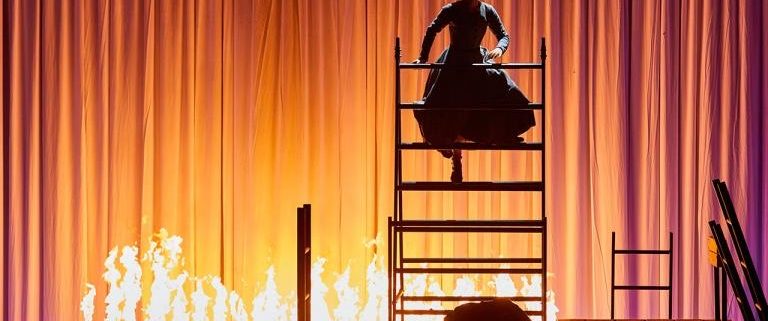
Picture this.
Your household is gathered around the TV screen, waiting for the curtain to go up on another streamed theatre show, generously released to keep our memories of live theatre fresh.
Mock tickets have been printed, interval orders have been given to the household bar, queues are forming outside the single, gender-neutral toilet.
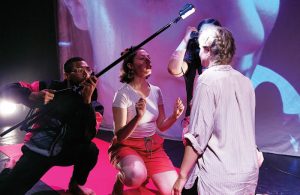
Theatre company YesYesNoNo is committed to live-streaming its show The Accident Did Not Take Place in the near future
The living room lights dim, the onscreen curtain goes up – and you’re lost. You have no idea what’s happening onscreen. Because when you’re visually impaired the access that you relied on in the theatre is no longer available to you.
While you who have your sight were collecting tickets in those heady long-ago days, blind and partially sighted people were onstage, exploring the set, handling the props and costumes, talking to members of the company.
While you were settling into your seats, blind and partially sighted people were already in theirs, listening to a live introduction giving information about the set, characters and costumes, describing the colours, textures, the way the set moves, the way the lighting contributes to the atmosphere of the production.
While you were enthralled by a fight scene, a dance routine, a piece of comedy, a chilling murder, they were having it described to them through a headset by an audio describer, allowing them to feel the thrill of being there in the audience and in the moment, knowing what is happening, laughing and gasping at the same time as the people around them.
With the advent of The Interval – the current period before the second half begins – all of that has ceased.
Coronavirus has forced theatres across the UK to close their doors indefinitely, but many have risen to the challenge by releasing digital versions of their most popular productions to enjoy at home.
However, with all the wonderful theatre streaming that is on offer, none of it is available with audio description.
Most of it has been audio described in the parent venues, introductions and description scripts already exist, but at the moment of writing none of them are being put to use.
Despite the eagerness from theatres to lift our spirits while we’re in isolation, visually impaired people remain locked out of an experience that they love.
When I bring this up – a lot – on Twitter and through conversations with venues, theatres have been pointing out to me that the shows are being subtitled.
As someone who, up until the 14th March, worked extensively as a theatre captioner too, I’m of course pleased to hear that. Captioning and subtitling allow deaf and hard of hearing people to join in the experience, and they have done, in great numbers.
But access isn’t one-size-fits-all and people are being left behind while venues work out how to make their content accessible to their visually impaired audience.
I’d like to put out a call for collaboration between service providers. While work is being done in individual theatres to find ways of including audio description, time is slipping by, and now visually impaired people are even experiencing social exclusion in their own living rooms.
We need the big players to come together and find a solution – one that goes far beyond the current time and allows digital theatre to become accessible to everybody, as a right, not an act of charity, now and forever.
Twitter.com/Elsiebiades
For further information about audio description: vocaleyes.co.uk
For further information about captioning: stagetext.org
To find out more about the digital content on offer:
https://www.mrcarlwoodward.com/theatre-news-2/theatre-is-facing-its-biggest-peacetime-threat/

