
Hamlet Hail to the Thief
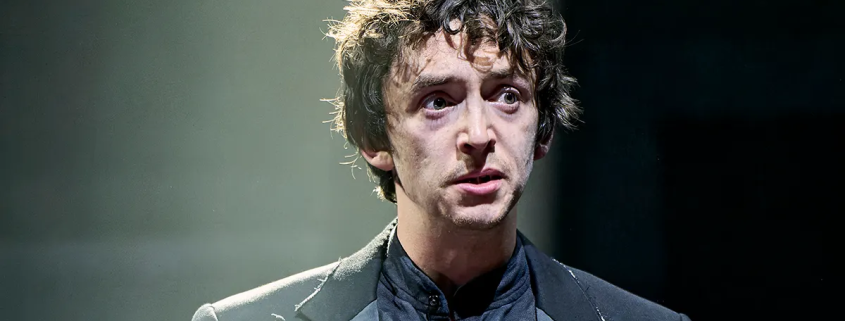
HERE’S the rub. Everyone feels free to meddle with Shakespeare. With no estate lawyers to stop them, directors are forever remixing the Bard. So a production that splices Hamlet with Radiohead’s 2003 album Hail to the Thief sounds like a gimmick.
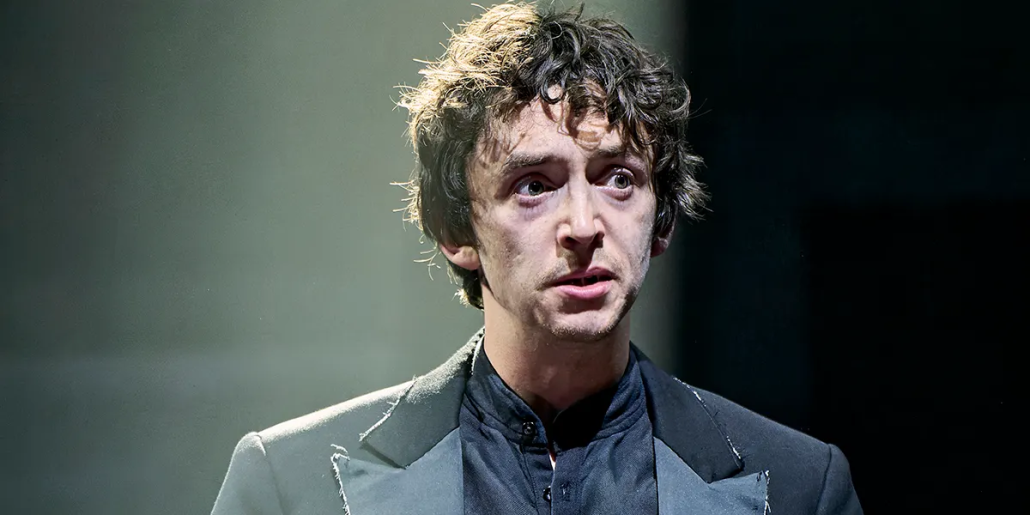
Superstar Samuel Blenkin’s Hamlet starts at fever pitch and only gets hotter. The production never gives him room to build an arc, so this is Hamlet as spectacle rather than philosophy. That’s no complaint.
In Christine Jones and Steven Hoggett’s production for the RSC, which reaches the Barbican after successful runs in Manchester and Stratford-upon-Avon, it turns out to be something much better.
The pairing makes sense. Shakespeare’s 1603 text and Radiohead’s ragged, politically charged album, released exactly four centuries later, share an obsession with ghosts, corrupt rulers and a mind under siege. At a brisk 100 minutes, both have been cut hard. Thom Yorke has broken his songs into what he calls “shattered pieces”, and the directors have stripped the play to the bone.
To put it in a nutshell, Hamlet is a mind that won’t stop asking questions, a temper that won’t stay put, and a body you can’t take your eyes off. The part asks an actor to be both thinker and athlete, beast and angel, cruel and tender, sometimes all in the same scene. No wonder Oscar Wilde decided there was no single Hamlet: “there are as many Hamlets as there are melancholies.”
Indeed, the famous lines remain, but much of Hamlet’s agonised moral wrangling is gone. That gives the evening real momentum, though it costs the prince some of his complexity.
Surprisingly, the songs deepen scenes rather than interrupt them. The boldest swap comes in Ophelia’s mad scene, where Sail to the Moon replaces her speech about rosemary and rue. It’s a gamble, but the song’s half-nonsensical words against its aching melody capture her unravelling perfectly. The Gloaming, written as a response to the Iraq war, plays over her funeral, and its anger at murderous power suits a court built on a killing.
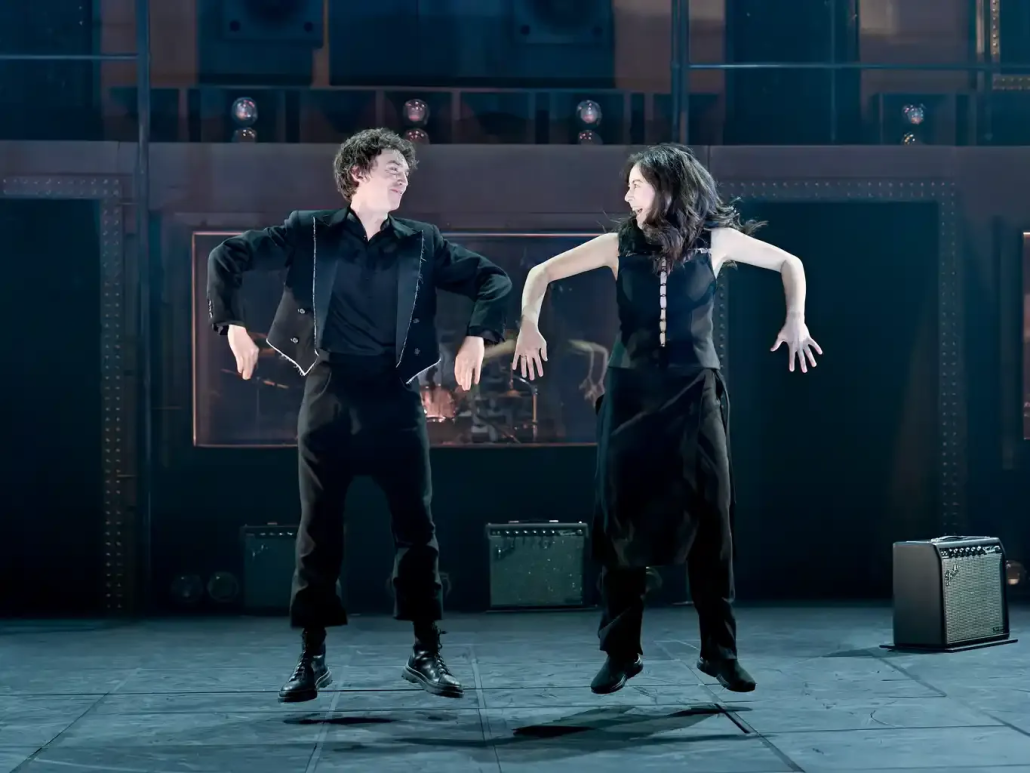
Hoggett, co-founder of Frantic Assembly, makes room for movement. Jess Williams’s jagged, spasming choreography conveys a world off its axis. The courtiers party hollowly to Go to Sleep, Hamlet literally loses his balance as he admits he has “lost all my mirth”, and a stiff, Fosse-like frug recurs throughout. At emotional peaks, the dance and the sound swamp the text, mostly to good effect. Chaos.
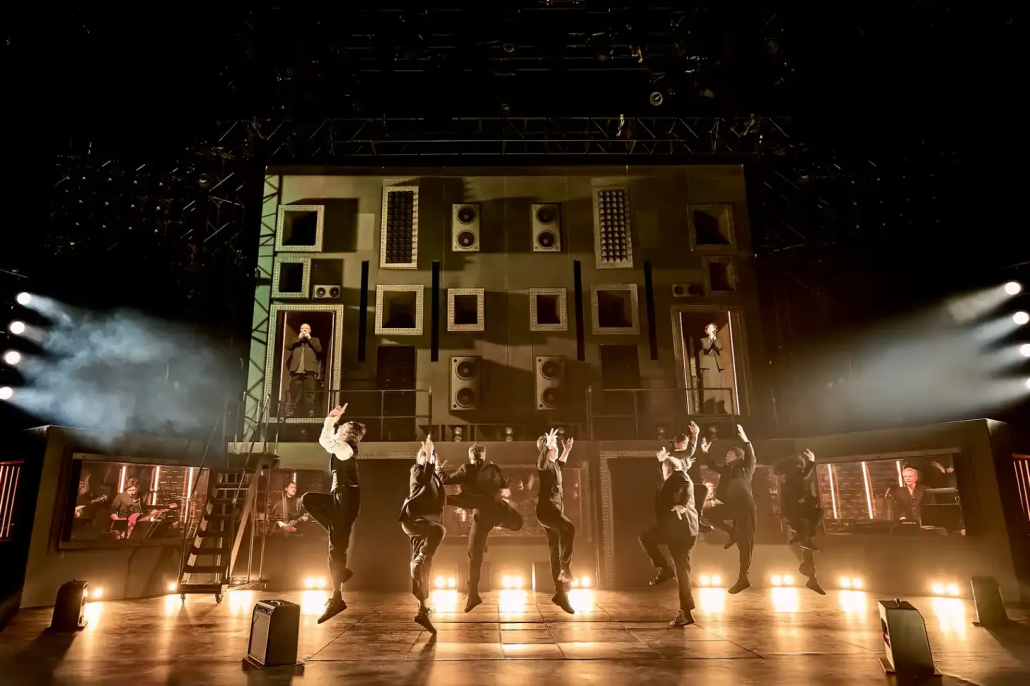
Elsinore’s wall is a stack of speakers, acoustic foam and backlit arrow slits, with the band in glass booths at its foot, sharing the stage as equals with the actors: Will Duke’s smart video designs and haunting projections bring it all together. Vocalists Ed Begley and Meg Hill appear in doorways above, a little like cuckoo-clock figures. Monochrome particles drip down the wall like blood and form the twitching face of the murdered king. Jessica Hung Han Yun’s sharp lighting, which even includes a neon-trimmed grave, turns potential kitsch into something mesmerising.
The rough-edged production is careless with its language. “Ye” and “you” swap places at random, and Hilton’s guilt-racked Claudius mutters “let the f***ing axe fall”. The final duel becomes a brutal wrestling dance over a dagger, with the poisoned spitting blood into the faces of those closest to them.
In any case, it isn’t flawless. Shakespeare’s Hamlet is a sharp, often funny man, but here a monochrome art-rock seriousness smothers his wit. Still, this odd, inspired hybrid is exactly the sort of thing to develop new audiences and introduce them to live theatre. It’s propulsive and fresh, and when the final line comes, “The rest is silence”, it feels earned. Absolutely ideal.
Runs at Barbican theatre, London, until 23 January